
What We Learned about Mealworm Protein Powder
What We Learned from Mealworm Protein Powder
Five years ago, at the very beginning of Planet Bugs, we went deep into mealworm protein powder. We thought it might be the future of insect-based food in North America.
To be honest, we thought we were on to something big. The protein content, the amino acid profile, the functional properties — on paper, mealworm powder had a real shot. So we did the research. We dug into the science. We talked to formulators.
We never really sold any. Here's why — and what we think comes next.
Why Mealworm Protein Powder?
The basics looked great.
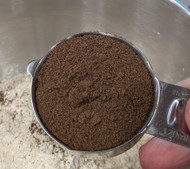
We tried creating Mealworm powder in two forms: a whole-ground powder that keeps the fats in, and a defatted concentrate that pushes the protein content higher, up to about 64%. The PDCAAS (protein digestibility-corrected amino acid score) comes in at 0.80 or higher, with methionine as the limiting amino acid. Beyond protein, mealworms deliver meaningful magnesium, phosphorus, and zinc. And the flavor profile is consistently described as nutty and earthy.
There's also mealworm oil, which sits in R&D as a potential palm oil alternative. But that's a story for another post.
The Amino Acid Story
This is where mealworm protein really stood out.
When we compared it side-by-side against whey, cricket, soy, and pea, one number jumped off the page. Per 100 grams of protein, mealworms delivered roughly 45 grams of essential amino acids. Whey came in at 34. Cricket at 39. Soy at 20. Pea at 24.
For a plant-based formulator trying to hit a complete amino acid profile, that's a real story. Soy and pea both bring well-known limiting amino acids to the table. Mealworm protein closes those gaps without needing to be blended with a complementary source.
Functional Properties
This is where things got interesting for food scientists — and where the data got messy.
We’re not food scientists or formulators, so we turned to published research for information on solubility, water hydration capacity, oil holding capacity, foaming, and emulsion behavior. These studies showed a wide range of values with rearing diet, processing method, and heat treatment all shifting the results.
The short version of what we found: solubility was low at neutral pH but climbed sharply in alkaline conditions, pointing to applications where high solubility wasn't the goal — extruded snacks, meat binders, nutrition bars, baked goods. Water hydration capacity ran across a useful middle range, good for dough and comminuted meat products. Oil holding capacity held up well against plant proteins.
But the most interesting finding was this: across multiple studies, mealworm protein behaved a lot like egg albumen — particularly for gelling, binding, and emulsification. That's a strong functional analog, and it pointed at where mealworm protein had the best chance: bakery, pasta, sausages, protein bars, and shakes.
The honest summary at the time: the research was in its infancy.
Five Years Later
The field hasn't been idle, but we haven’t been paying much attention to it. We're not going to walk through everything, but two developments deserve a flag for anyone tracking this space.
Gelation flipped from a weakness to a strength. When we did our research, the gelling properties of mealworm protein were rated "moderate to poor." Recent work using transglutaminase and co-gelling with myofibrillar proteins has changed that story. A 2025 study found that mealworm powder added to shrimp myofibrillar protein pushed water holding capacity to 78.5% at the right ratio. That has real implications for sausages, surimi, fish balls — the exact category many formulators were skeptical of a few years back.
Bioactive peptides became a real story. This barely registered in 2020. Today, mealworm protein hydrolysates have shown antioxidant activity that exceeds soybean peptides and approaches fish-derived peptides, along with measurable antihypertensive (ACE-inhibitory), antidiabetic, and anti-inflammatory effects. That's an entirely different value proposition than commodity protein — it points at nutraceuticals and functional foods.
None of this changes the strategic conclusion we came to. But the science is in much better shape than it was when we walked away.
So, Why Did We Walk Away?
A few reasons, in the order they hit us.
We were thinking about the wrong competitive set. Going in, we framed mealworm protein as an alternative to meat — a more sustainable animal protein. Error. Once your product is in powdered form, you're not competing against beef or pork or chicken. You're competing against every other powdered protein on the shelf — on cost, on functionality, on sustainability, on taste, on label appeal.
The protein ingredient space is brutally crowded. While we were developing our position, the mindshare in alt-protein was going almost entirely to new plant sources. Pea was already winning. Mung bean, chickpea, fava, and a parade of others were lining up behind it. They had the financial backing, the formulator attention, and the shelf space. Insect protein had a narrow window of attention to break through, and it didn't.
We couldn't answer the "why us, why now" question for food creators. This was the decisive one. Food formulators don't try new ingredients because the ingredient is interesting. They try a new ingredient because it solves a problem better than what they're already using. Despite mealworm protein's nice functional profile, we couldn't find the use case where it was clearly the best tool for the job. Egg albumen did the same things more cheaply. Pea protein was complete enough at a fraction of the price.
Taste was a real obstacle. Several formulators told us the same thing: the nutty/earthy flavor would need to be masked in most applications. That means more processing steps. More cost. More reasons to default back to something neutral. Pea protein has been fighting the same battle for years, and it probably took millions of dollars of R&D to get the off-notes down. Mealworm powder wasn't going to get that level of investment.
And one more thing we'll just put on the record: we never seriously explored the oil side. Mealworm oil is a potentially interesting palm oil alternative. We may regret not poking at it harder. If you're working on it, we'd love to hear what you're seeing.
Where Things Are Actually Headed
Here's what we landed on, and it's the reason our focus today is where it is.
Whole insects — not powders or oils — might be the first form to win meaningful market share in Western diets.
Lightly processed dried mealworms (or crickets or grasshoppers for that matter) function a lot like nuts. They have crunch. They have flavor. They hold up in a dish. And the customer doesn't have to suspend disbelief about what they're eating. They drop naturally into the kinds of dishes people actually cook from — one-pot meals, grain bowls, big salads, trail and snack mixes. Don Bugito's snack mixes are a really good preview of where this goes.
That's the opposite of the powder strategy. Powders win by disappearing into someone else's product. Whole insects win by being recognizably themselves. And that turns out to be a much easier story to tell a curious eater than "here's a hidden protein you've never heard of."
Of course, there's a big catch: only about 40% of US consumers will eat an insect they can actually see. The disgust factor turns away a huge slice of the market.
What We're Building Instead
We believe in the whole-insect future. But we're not the ones building toward it right now — and that's deliberate.
Whatever form insects ultimately take in human diets — dried, blanched, baked, fried, blended into snack mixes — none of it works without a trusted supply chain that can produce them at the right cost and quality. The economics of raising insects at scale on this continent are still being figured out. That's the problem we decided to solve first.
So instead of pushing further into human food — which is slow to adopt and expensive to formulate for — we focused our farming operation on a market that already exists and already wants what we grow: pet treats. Live and dried insects for backyard poultry, wild bird feeding, and reptile pets. The customers are there. The demand is steady. The product moves without anyone needing to be convinced that insects belong in a diet.
That gives us the runway to dial in the production side — rearing, processing, yields, unit economics — in a market that pays for it today, while the human food side of the industry matures around us. When the time comes for whole-insect snack mixes to find real shelf space, the operations that already know how to grow mealworms cleanly and consistently will be the ones positioned to supply them.
The Bottom Line
The nutritional case for mealworm protein powder seems strong. The functional case is strong with caveats. The commercial case is what needs the most time — and the most honesty — to come into focus.
We stopped selling it. We still think it's one of the more interesting ingredients in the alternative-protein conversation, and the underlying research is worth knowing — especially as the science continues to mature.
If you're a formulator, researcher, or curious eater working through any of this for your own project, we'd love to compare notes. Get in touch.